

Activities
Why Walking in Wild Places Restores Us
17 September 2026
Why Walking in Wild Places Restores Us
There is a particular kind of quiet that only exists off the beaten path. Not the silence of an empty room, but something fuller: birdsong threading through beech canopy, the low murmur of a river finding its way downhill, the soft percussion of boots on earth. It is a quiet most of us have to travel to find, and once found, it tends to stay with us long after we have gone home.
Across three decades of seeking out the world’s finest walking country, from the tussock highlands of the South Island to hidden valleys few travellers ever hear of, one truth holds steady: nowhere restores quite like New Zealand. Its conserved wilderness, much of it privately held and lightly trodden, offers something increasingly rare in modern travel: genuine, unhurried solitude.
A coastal farm walk like Pahi, a high-country traverse in the vein of Blue Duck Station, or a wilderness track along the Kaikoura coast will each teach you something different about pace, but the lesson underneath is always the same: the further from the road, the deeper the reset.

The mind finds its own pace
Something happens to the mind when the body settles into a walking rhythm. The mental chatter that follows most of us through our working lives begins to loosen its grip. Attention softens, then sharpens again on smaller, better things: the shape of a leaf, the temperature of the wind, the sound of a boot finding purchase on stone. This is not accidental. Time spent walking through undisturbed, natural landscapes has been shown to ease the physiological markers of stress and support the kind of mental clarity that a desk rarely offers. It is often on a trail, well past the first hour, that the best ideas quietly arrive.

Terrain that asks something of you
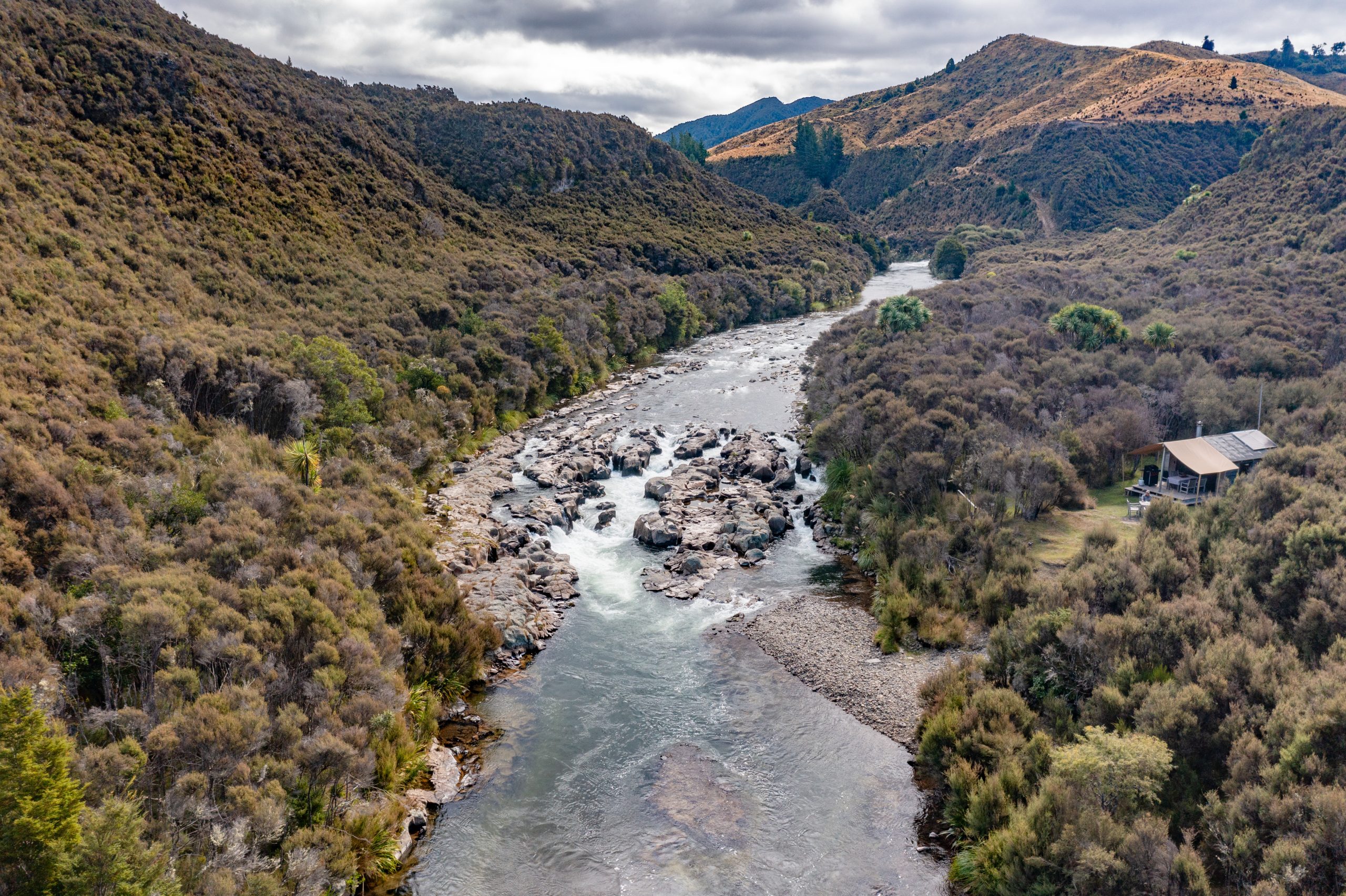
The finest walks are rarely flat. A track that climbs, dips, crosses a stream and rewards a little effort with a view worth the exertion does more for the body than any treadmill ever could. Uneven, varied ground builds strength, balance and resilience in ways that engineered paths cannot replicate, and there is real satisfaction in earning a vista rather than driving to it. New Zealand’s back country, with its river flats, native forest and hill-country climbs, offers precisely this kind of terrain: forgiving enough for a leisurely afternoon, varied enough to leave you pleasantly spent by evening.

Wonder, at a scale you cannot manufacture
There is a particular feeling that only vast, untouched landscapes seem to produce. Standing in a valley of ancient beech forest, or watching light move across distant ranges, has a way of putting daily concerns into proper perspective. It is difficult to feel small in the right way anywhere but in wild country, and New Zealand’s conserved high country, much of it privately protected and rarely seen, delivers this feeling with unusual generosity.
The feeling that arrives before the words do
Long before a walk registers as a thought, it registers as a feeling, and much of that feeling begins with scent. The sharp, mineral smell of rain lifting off warm earth. The cool, green note of moss and damp bark deep in the beech. The faint sweetness of manuka carried on a north-westerly. These fragrances rarely announce themselves, yet they do more to anchor a memory of a place than any photograph could. Long after the details of a track have faded, it is often a single scent, encountered again years later, that brings the whole day rushing back.
There is, too, a feeling that is harder to name: a kind of quiet joy that settles somewhere between contentment and awe. It arrives without warning, usually well into a walk, once the mind has stopped narrating and simply started noticing. Guests describe it differently: a lightness, a sense of having exhaled properly for the first time in months, a feeling of being exactly where they are meant to be. Whatever the words, it is this feeling, more than any view or vista, that people carry home with them.
Solitude, chosen deliberately
Increasingly, the true luxury of travel is not access but absence: the absence of crowds, of noise, of anyone else’s itinerary. A walk taken alone, or in the quiet company of one or two others, allows the senses to do what they do best when nothing else is competing for attention. Whether guided along the more remote corners of a private estate or self-navigated with nothing but a simple map and a picnic lunch for company, a day spent walking through untouched country remains one of the few genuine forms of escape left.

Better rest, longer after the walk ends
The benefits of a good day’s walking rarely end when the boots come off. Physical activity paired with daylight and fresh air supports deeper, more restorative sleep, and there are few better places to notice this than in the New Zealand back country, where evenings are dark, star-filled and entirely free of the glow of a city skyline. Guests often remark that they sleep better after a single afternoon on the trails here than they have in months at home.
Few places on earth combine this scale of untouched wilderness with genuine privacy, and Poronui’s 16,000 acres of native forest, river valley and hill country offer exactly that: room to walk, to wander, and to find whatever kind of quiet you came looking for.